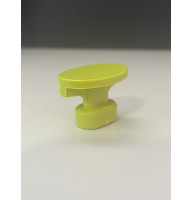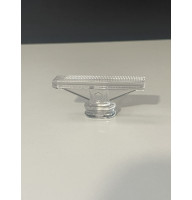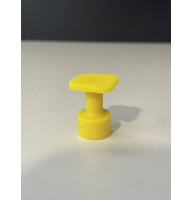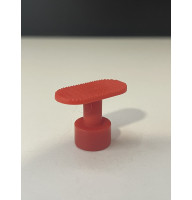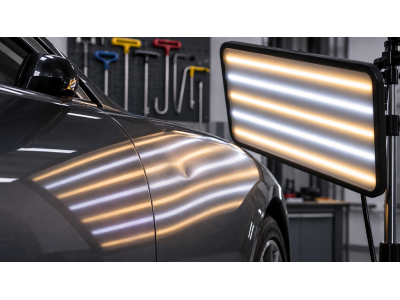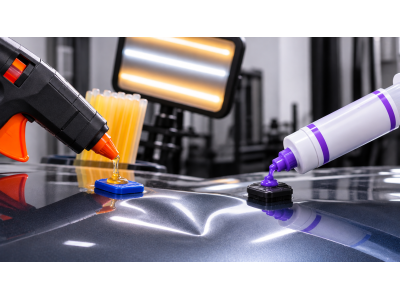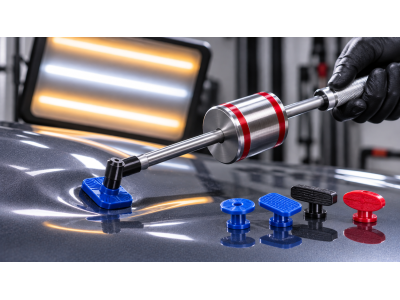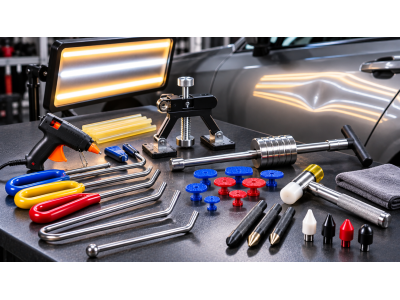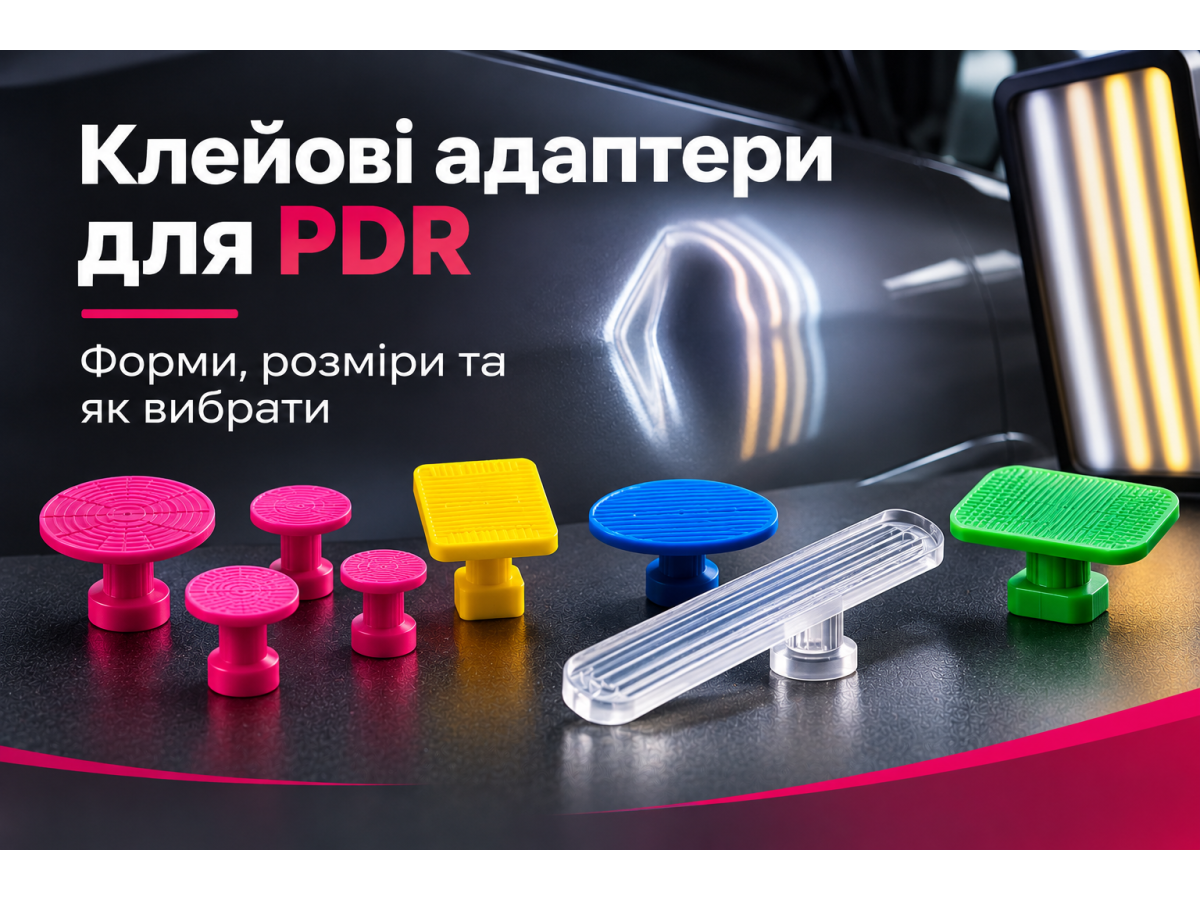
PDR glue pulling tabs transfer force from a pulling tool to a vehicle panel through an adhesive bond. Choosing the appropriate shape, size and connection helps technicians control which area of metal moves during paintless dent repair.
Should you choose a round, oval, square or elongated tab? Is a larger footprint always better? This guide explains contact geometry, puller compatibility and how to build a practical tab collection.
How Do PDR Glue Pulling Tabs Work?
A tab is bonded to a prepared panel with a suitable adhesive. Once the bond is ready, a slide hammer, mini lifter or pulling bridge applies controlled pulling force through the connection.
The result depends on tab geometry, adhesive performance, placement and pulling direction. An oversized tab may engage surrounding metal, while an unsuitable small tab may not distribute force as intended.
Explore professional PDR glue pulling tabs at Vmyaten.
Round, Oval, Square and Crease Tabs
Round tabs
Round bases provide a symmetrical contact area. Compact sizes may be suitable when the target zone is relatively localized.
Oval tabs
Oval designs can be oriented along part of an elongated distortion. The AUSSLE Oval 26 × 13 mm is one example available in the catalog.
Square tabs
Square bases offer a different contact footprint. Laka Tools produces a 15 × 15 mm square tab, among other sizes.
Elongated and crease tabs
Long, narrow designs allow the bonding area to follow part of an extended distortion. The Tequila Skinny 52 × 11 mm is an example of this format.
However, a crease tab cannot guarantee a successful repair on sharply folded or stretched metal. The repair method must suit the damage.
Why Tab Dimensions Are Not the Same as Contact Area
The longest tab is not necessarily the strongest or the most accurate. Actual bonding area depends on the base shape, surface relief and how the adhesive makes contact.
A 15 × 15 mm square has a geometric area of 225 mm². By comparison, 26 × 13 mm describes a bounding rectangle of 338 mm², not the actual area of an oval base.
These measurements can help compare dimensions, but they cannot predict pulling strength or dent repair results by themselves.
How to Choose a Glue Pulling Tab in Five Steps
- Read the dent. Use PDR reflection lighting to identify low spots, raised areas and metal tension.
- Define the target area. Decide which section needs correction during the current pulling stage.
- Select the footprint. Compare round, oval, square and elongated shapes.
- Check compatibility. Confirm adhesive type, tab stem and pulling-tool connection.
- Make a controlled pull. Reassess panel reflections before adjusting the tab size or placement.
Do not increase pulling force aggressively when the tab fails to move the metal. Check the bond, tool connection and force direction first.
Comparing PDR Glue Tabs at Vmyaten
| Product | Size | When to consider it |
|---|---|---|
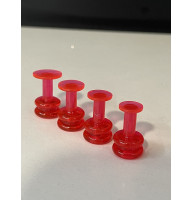
| DEAD DENT TOOLS PINK Set | 9, 10, 11, 13 mm | Comparing compact footprints |
| AUSSLE Oval | 26 × 13 mm | An oval contact zone |
| Laka Tools Square | 15 × 15 mm | Square footprint requirements |
| Tequila Skinny | 52 × 11 mm | An elongated contact area |
| BLACK PLAGUE Green | 32 × 20 mm | Comparing broader tab designs |
These products illustrate different contact geometries. Choose according to the panel and pulling system rather than assuming one design will perform best in every situation.
See the complete PDR glue tab selection for product details and availability.
Checking Hot Glue and Cold Glue Compatibility
| Check | Why it matters |
|---|---|
| Adhesive system | The tab surface must suit the adhesive |
| Contact geometry | It affects the bonding footprint |
| Tab stem | It must match the puller's grip |
| Quick-release connection | Requires compatible receiving hardware |
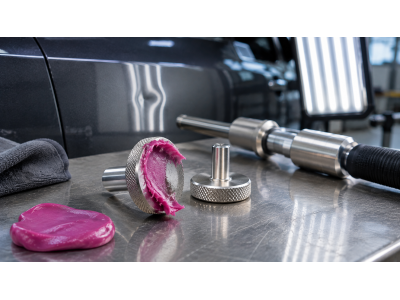
Dedicated cold glue adapters may use metal contact surfaces and quick-release attachments. Vmyaten lists The Best Choice 30 mm cold glue adapters in flat and convex versions.
Before purchasing PDR glue pulling tabs, verify the exact adhesive system and the connection to your pulling tool.
Explore compatible PDR adhesives and glue pulling tools.
Which Glue Tabs Should Beginners Buy?
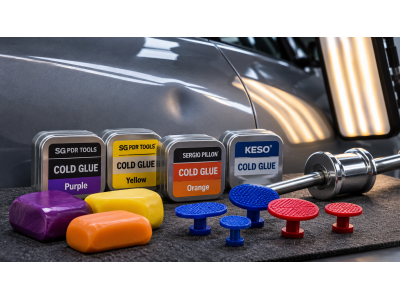
A practical starting collection may include a few small round tabs, one oval shape and one elongated tab. This offers different contact options without purchasing a large number of similar items.
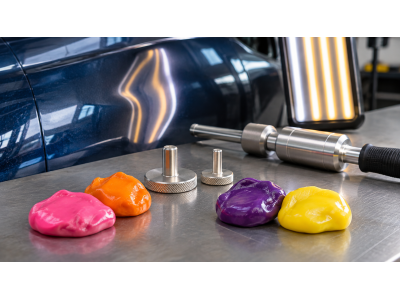
If you use cold glue, select a matching adapter system instead of assuming that standard hot glue tabs will work. Confirm the grip and connection before ordering.
Common Glue Tab Selection Mistakes
- Choosing the largest tab for every dent.
- Ignoring the actual bonding surface and base relief.
- Buying tabs without checking the pulling-tool connection.
- Increasing impact instead of reassessing adhesion and placement.
- Pulling on compromised paint without considering the risk of damage.
Frequently Asked Questions
Which tab should I use for a small dent?
Consider a compact tab with a contact footprint suited to the area being corrected.
Does a larger tab always pull harder?
No. Results depend on adhesion, base geometry, pulling direction and panel condition.
Are smooth or textured tabs better?
They create different adhesive contact conditions. Performance depends on tab design, material and application conditions.
Can hot glue tabs be used with cold glue?
Not always. Check the intended adhesive system and pulling-tool connection.
How can I check slide hammer compatibility?
Compare the tab stem, grip dimensions and attachment type. A compatible adapter may be required.
Should beginners buy individual tabs or a set?
A compatible multi-size set is a practical starting point. Specialized shapes can be added later.
Where to Buy PDR Glue Pulling Tabs
When choosing PDR glue pulling tabs, compare contact geometry, dimensions, adhesive compatibility and attachment design.
At Vmyaten, you can explore round, oval, square, elongated and specialized adapters. Check each product's specifications and select tabs that fit your pulling system.