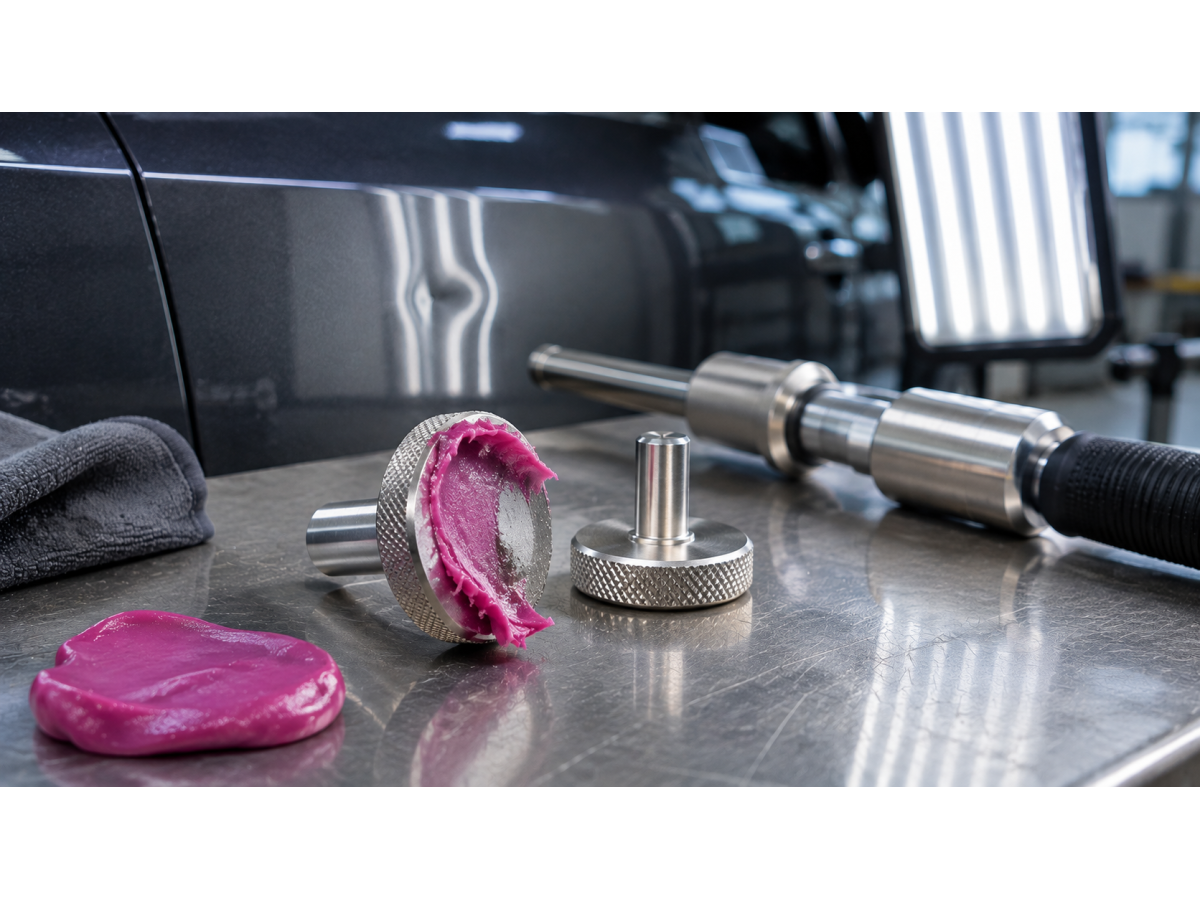
PDR cold glue not pulling dents as well as expected? The adhesive itself may not be the problem. Panel temperature, contaminated glue, an unsuitable adapter or poor pulling alignment can all prevent effective force transfer.
Before switching brands or using a stronger slide-hammer impact, inspect what happens when the pull fails. Does the adhesive release from the paint, separate from the adapter, tear internally or stay attached while the dent barely moves?
PDR Cold Glue Not Pulling: Identify the Failure
The behavior of the adhesive offers useful clues. Start by checking the panel, glue and adapter after an unsuccessful pull.
| What happens | Possible issue | Check first |
|---|---|---|
| Glue releases from the panel | Poor bonding to the paint | Temperature and surface preparation |
| Glue stays on the panel, adapter releases | Weak bonding to the adapter | Adapter surface and compatibility |
| Adhesive stretches or tears | Internal failure under load | Glue condition, temperature and force |
| Adapter holds but the dent does not move | Metal tension or pulling geometry | Tab placement and pulling direction |
These are diagnostic clues rather than definitive proof. Several problems can occur together, so inspect the complete setup before deciding on a correction.
Adhesion vs Cohesion: What Is Failing?
Adhesion is the bond between the glue and another surface, such as the vehicle panel or pulling adapter. Cohesion describes the adhesive's internal integrity.
If the glue releases cleanly from a surface, investigate that bonding interface. If the mass tears within itself, examine its condition, operating temperature and applied load.
Seven Reasons PDR Cold Glue Fails to Pull a Dent
1. Panel temperature is unsuitable
Cold glue does not need a hot glue gun, but its performance still depends on temperature. The panel can be warmer or colder than the surrounding air.
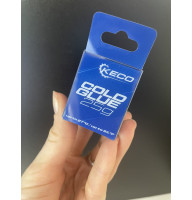
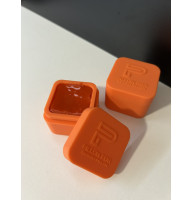
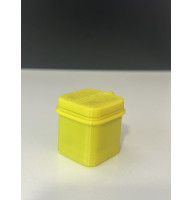
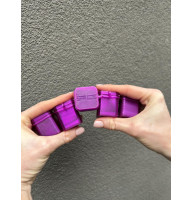
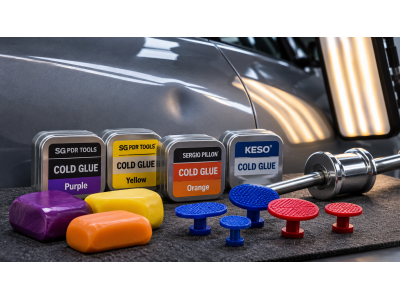
For example, Sergio Pillon Pink lists +5 to +40 °C, while SG PDR TOOLS Purple lists +15 to +50 °C.
Fix: check the actual panel temperature and use a formulation suitable for those conditions. Published ranges are not guarantees of identical performance at every temperature.
2. The adhesive is contaminated
Reusable glue can collect workshop dust, polish residue and other debris. Contamination can interfere with consistent contact.
Fix: inspect and prepare the material according to its manufacturer's instructions. Replace it when suitable working properties cannot be restored.
3. The panel is not properly prepared
Wax, grease, polishing products and moisture may prevent reliable bonding even when the paint looks clean.
Fix: clean and dry the target area using a product compatible with the vehicle's finish. Check for previous paint repairs.
4. The adapter is incompatible with cold glue
Cold glue systems require suitable contact surfaces and attachment designs. Standard hot glue pulling tabs may not provide the same compatibility.
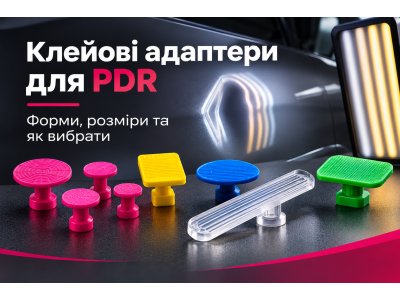
Fix: inspect the adapter and use a model intended for the adhesive system. Vmyaten carries dedicated The Best Choice 30 mm cold glue adapters with flat and convex contact bases.
Explore PDR glue pulling adapters.
5. Adapter size or placement is wrong
An oversized contact footprint may engage surrounding metal. A poorly positioned or unsuitable smaller adapter may fail to transfer force to the intended area.
Fix: read the panel under PDR lighting and select the contact footprint for the current correction stage.
6. Pulling direction or force application is unsuitable
A stronger impact does not correct poor alignment. Excessive force may release the bond or damage weakened paint.
Fix: inspect the pulling axis, attachment and force application. For some tasks, a tool offering gradual pulling control may be more appropriate.
7. Dent geometry limits the pulling method
Sharp creases, stretched metal and areas under substantial tension may not respond to adhesive pulling alone.
Fix: reassess the repair strategy. Access with PDR rods or another suitable technique may be necessary.
Three Checks to Find the Cause Faster
- Check the panel bond. If the adhesive releases from the paint, inspect cleanliness, temperature and glue condition.
- Check the adapter bond. If the glue remains on the panel, examine the adapter surface and compatibility.
- Check metal movement. If the bond holds without lifting the dent, review tab placement, pulling direction and panel tension.
If the adhesive tears internally, investigate its consistency, preparation and loading conditions separately.
Problem, Diagnosis and Recommended Action
| Problem | Diagnosis | Next action |
|---|---|---|
| Weak panel adhesion | Temperature, contamination, formulation | Prepare panel and check the adhesive |
| Adapter releases | Contact surface and fit | Use a suitable cold glue adapter |
| Glue tears or stretches | Consistency, temperature, load | Review preparation or formulation |
| Dent does not move | Metal tension and pulling direction | Reassess the repair technique |
| New high spot appears | Panel reflection after pulling | Stop pulling and assess finishing work |
When Should You Change the Glue or Equipment?
If panel temperature falls outside the adhesive's specified range, compare compatible PDR cold glue formulations.
If adhesion to the adapter is unreliable, investigate a dedicated cold glue tab. If force application is unsuitable, review your glue pulling tools.
A new adhesive will not necessarily solve a dent geometry problem. Diagnose the cause before buying replacements.
Frequently Asked Questions
Why won't PDR cold glue stick to the panel?
Check panel temperature, contamination, adhesive condition and preparation of the painted surface.
Why does the glue stay on the panel when the adapter releases?
Possible causes include an incompatible or contaminated adapter, poor contact with its base or unsuitable adhesive preparation.
Does cold glue need to be kneaded before use?
Some formulations, including SG PDR TOOLS Purple, recommend kneading. Follow the specific manufacturer's instructions for other products.
Why does the adapter hold while the dent stays low?
Pulling direction, adapter placement, panel tension or dent geometry may be limiting metal movement.
What if a high spot appears after pulling?
Stop pulling, inspect the panel under PDR lighting and determine whether controlled finishing correction is required.
What to Do When PDR Cold Glue Is Not Pulling
If you are experiencing PDR cold glue not pulling a dent effectively, start with the failure pattern rather than changing brands immediately. Check the panel, adhesive condition, adapter and pulling direction before selecting replacement equipment.
Vmyaten offers cold glue formulations, compatible adapters and professional pulling equipment for different PDR working conditions.