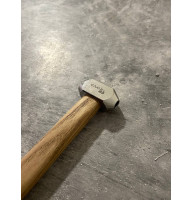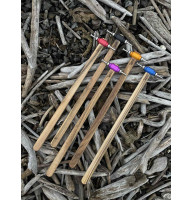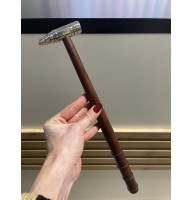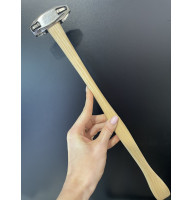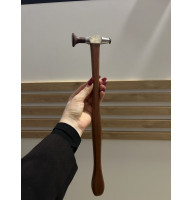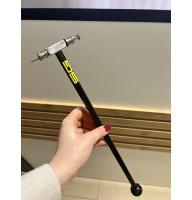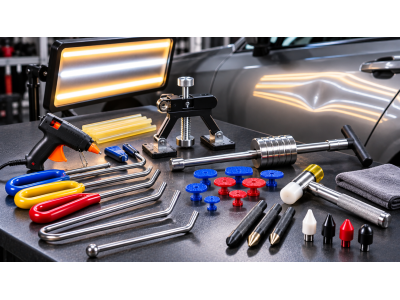
A PDR blending hammer is designed for controlled finishing during paintless dent repair. It helps technicians correct raised areas and refine panel contours after pushing or glue pulling.
The right hammer is not necessarily the heaviest or most expensive. Balance, handle comfort, contact tip shape and thread compatibility all affect how practical it is. This guide helps you compare professional designs and choose a suitable tool.
What Is a PDR Blending Hammer Used For?
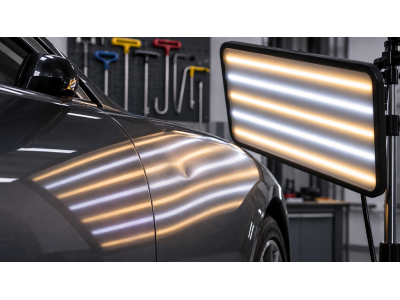
Blending hammers are used to apply controlled tapping force to selected raised areas. Technicians monitor reflected lines from a PDR light to identify the working point and evaluate the result.
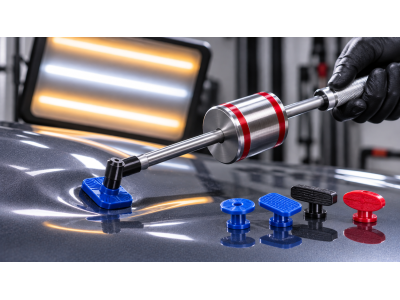
A blending hammer is different from a slide hammer. Slide hammers deliver pulling impulses through an attached tab, while blending hammers are used for tapping and finishing.
Explore professional PDR blending hammers.
Types of Blending Hammers
Traditional hammers
These have a defined contact head. Handle length, balance and head geometry influence how comfortably technicians can work.
Hammers with interchangeable tips
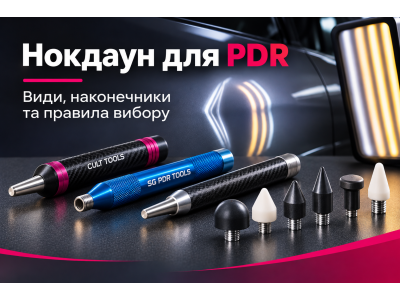
Replaceable tips allow the contact area and material to be changed for different finishing operations. Check thread size and included accessories.
Auxiliary mallets
Rubber, nylon and other specialized mallets have different contact properties. They can be useful for suitable tasks but do not universally replace precision blending tools.
How to Choose a PDR Blending Hammer: 4 Factors
1. Weight and balance
A light hammer may feel comfortable during repetitive finishing, but weight alone does not determine accuracy. Consider handle length, mass distribution and control of small movements.
2. Handle material
Wood, metal and composite handles offer different grip characteristics. Choose a design that feels secure and allows repeatable movement without excessive wrist strain.
3. Tip geometry and material
Rounded tips distribute contact over a broader area, while narrow tips concentrate it on a smaller point and require more precise placement.
Polymer and metal tips have different contact characteristics. A softer tip does not eliminate the risk of paint damage if excessive force is used.
4. M8 versus 5/16-inch threads
These are different connection standards and cannot be directly interchanged. If you already own replacement tips, confirm the hammer's thread before purchasing.
Explore replaceable PDR tips.
Which Blending Hammer Fits Your Work?
| Your requirement | What to consider |
|---|---|
| First blending hammer | Good balance and comfortable grip |
| Different finishing tasks | Interchangeable contact tips |
| Existing M8 tips | An M8-compatible hammer |
| Existing 5/16-inch tips | Matching thread or suitable adapter |
| Small localized high spots | A hammer and suitable knockdown |
Comparing Professional Blending Hammers
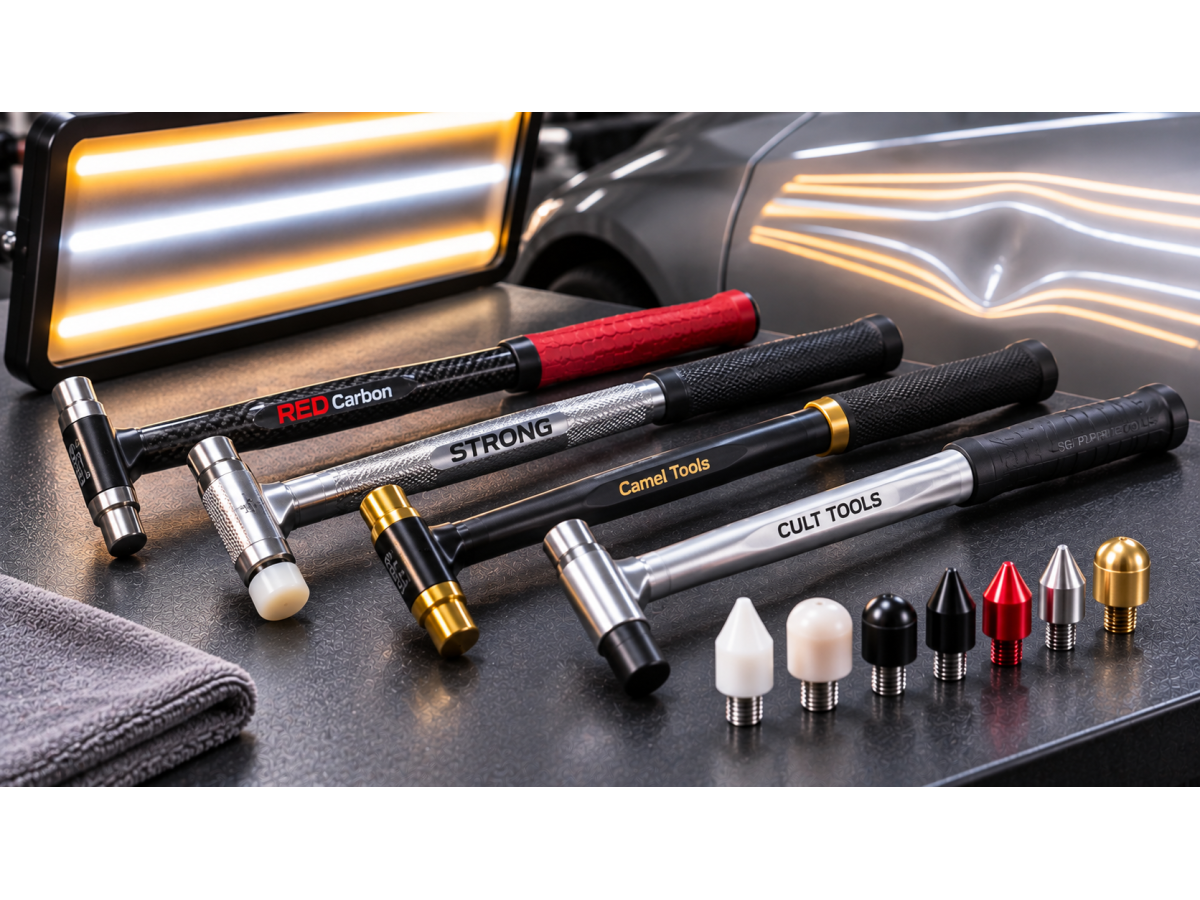
Vmyaten offers models from RED Carbon, STRONG, Camel Tools, CULT TOOLS and SG PDR TOOLS. Compare the specifications of the exact product rather than assuming every hammer from one brand uses the same connection.
| Model | Catalog specification | Buying consideration |
|---|---|---|
| RED Carbon | 170 g, 33 cm, M8 | Lightweight construction |
| STRONG M8 | Steel and polyacetal tips | M8 accessories |
| Camel Tools M8 | Replaceable M8 tips | Existing M8 system |
| CULT TOOLS | Duralumin construction, replaceable tips | Construction and balance |
| SG PDR TOOLS | Titanium replaceable tips, 5/16-inch | Compatible 5/16-inch system |
Review the PDR hammer catalog for the latest product availability and accessories.
Blending Hammer vs Knockdown Tool
A blending hammer can contact a suitable raised area directly. A knockdown positions a separate contact tip on a specific high point before controlled hammer taps are applied.
Knockdowns can be useful for precise contact placement, especially when the direct hammer angle or head shape is unsuitable.
Explore PDR knockdown tools.
Common Mistakes During Blending
- Using strong impacts without inspecting the surface.
- Choosing an unsuitable contact tip.
- Working without readable PDR light reflections.
- Installing damaged or incompatible replacement tips.
- Continuing to tap without checking the result.
Frequently Asked Questions
What PDR blending hammer should a beginner choose?
A well-balanced hammer with a comfortable grip is a practical starting point. Check the thread and included tips if you need interchangeable accessories.
Which tips are best for PDR blending?
Choose tip shape and material according to the high spot and required contact area. No single tip is best for every repair.
Are M8 and 5/16-inch tips interchangeable?
Not directly. A suitable thread adapter is required when switching between these standards.
Do I need a knockdown with a blending hammer?
Not for every operation, but a knockdown can help position the contact point precisely on small raised areas.
Where to Buy a PDR Blending Hammer
When choosing a PDR blending hammer, compare weight, balance, handle comfort, tip shape and thread compatibility. A matching knockdown may also be useful for precise finishing.
At Vmyaten, you can compare professional blending hammers from RED Carbon, STRONG, Camel Tools, CULT TOOLS and SG PDR TOOLS. Check specifications and available accessories before ordering.