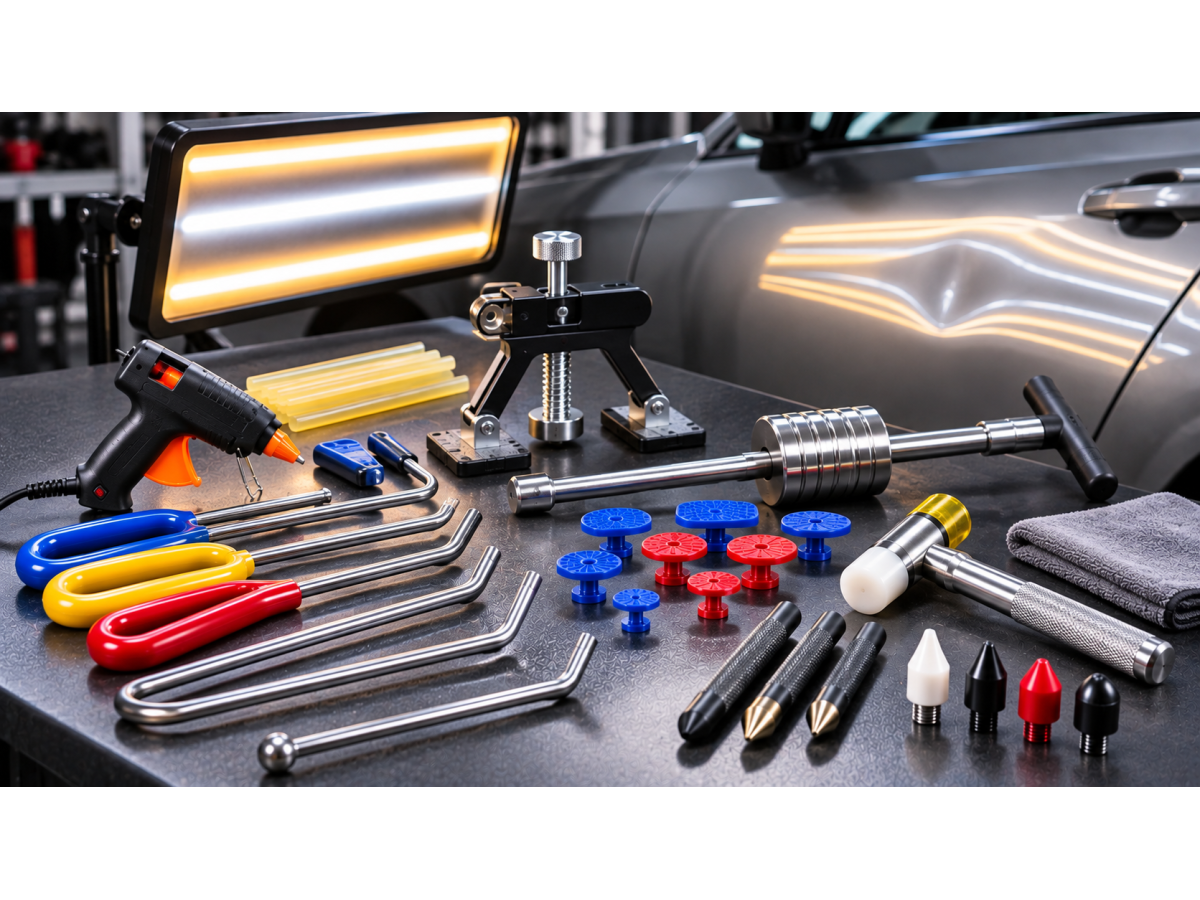
Paintless dent repair tools should be selected according to the repairs you intend to perform, not simply by the number of items in a kit. Effective PDR work requires clear reflections, controlled metal movement, suitable panel access and finishing equipment.
A beginner does not need a large professional collection immediately. A smaller set of compatible tools offers a more practical starting point. This guide explains which purchases to prioritize and which upgrades can wait.
Essential Paintless Dent Repair Tools for Beginners
A practical PDR kit typically includes five groups: reflection lighting, rods and levers, glue pulling tools, finishing hammers and knockdowns, and protective accessories.
Each has a different purpose. Glue pulling cannot replace every rod technique, while even an extensive rod collection is difficult to use accurately without good lighting.
1. PDR Lighting: Your First Priority
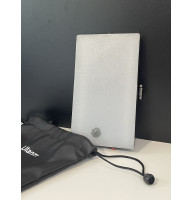
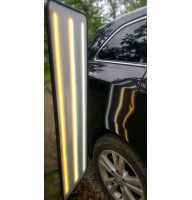
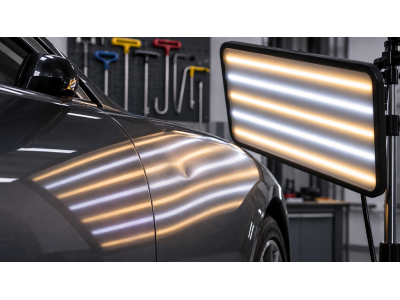
A reflection light helps technicians identify low and high spots by reading reflected lines across the vehicle panel.
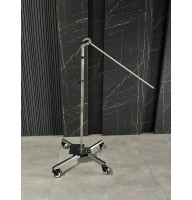
For a starter kit, prioritize adjustable positioning and a clear reflection pattern. Check whether a stand, mount and power supply are included.
Compare PDR lights and mounting accessories.
2. PDR Rods: Start with Versatile Shapes
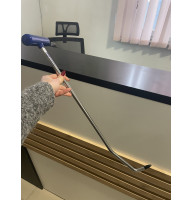
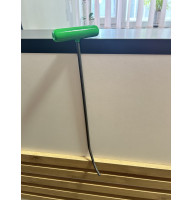
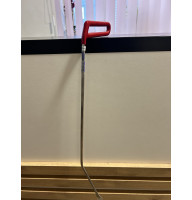
Repair rods are used to move metal from behind the panel when safe access is available. Different shaft lengths, bends and tip shapes suit different repair positions.
Consider a short rod, a medium-length tool and a different working-tip geometry as your starting selection. Larger hail sets and specialized rods can be added when necessary.
Browse PDR rods and dent repair levers.
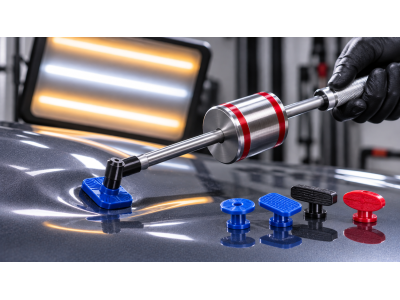
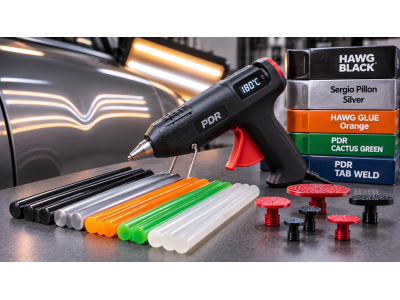
3. Glue Pulling Equipment for External Repairs
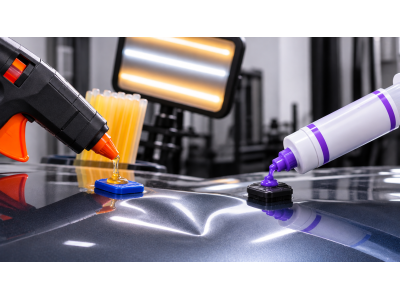
Glue pulling is an option when rear access is restricted and the paint condition permits an external pull.
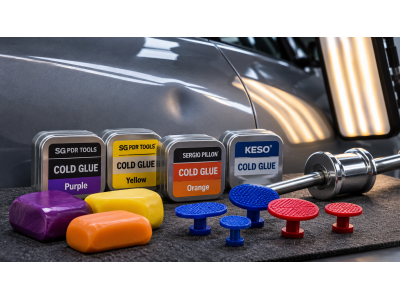
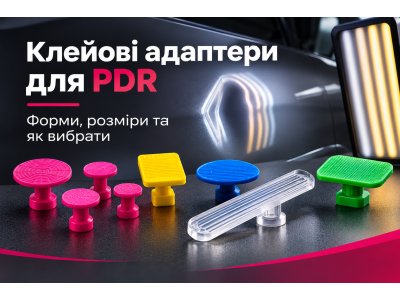
Hot glue requires a gun, adhesive sticks, tabs and pulling equipment. Cold glue uses a reusable-type compound and compatible pulling pads, depending on the formulation.
For beginners, starting with one compatible system can reduce unnecessary purchases. Compare PDR glue pulling systems before selecting equipment.
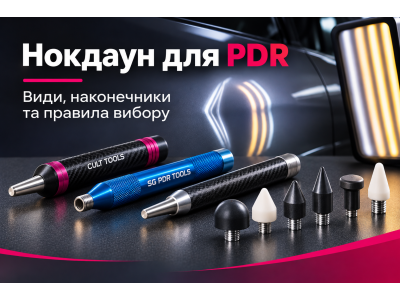
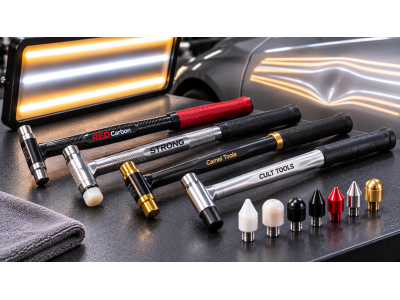
4. Knockdowns, Blending Hammers and Tips
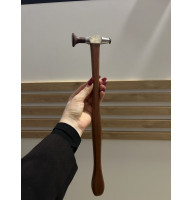
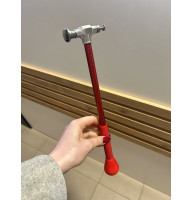
After pushing or pulling, raised areas may need controlled finishing. Blending hammers and knockdowns help technicians refine the metal while monitoring reflections.
Start with a versatile hammer and knockdown. Add interchangeable tips according to your work and check connection specifications carefully. M8 and 5/16-inch threads are not directly interchangeable.
Explore PDR hammers and knockdowns and replaceable tool tips.
5. Protective Accessories You Should Not Overlook
Window guards, access-hole protection, rod supports, door holders and suitable trim-removal tools help organize PDR work while reducing the risk of accidental damage.
Choose accessories that match the vehicle panels you expect to repair. Browse PDR workshop accessories for compatible options.
Beginner PDR Kit vs Advanced Equipment
| Start with | Add later |
|---|---|
| Adjustable reflection light | Additional mobile lighting |
| Two or three versatile rods | Specialized hail rods and larger sets |
| One compatible glue system | Additional pulling methods |
| Hammer, knockdown and protection | Specialized interchangeable tips |
Match Your PDR Kit to the Repair
Door dings: compact rods, reflection lighting and window protection are often relevant. Hood and roof dents: longer rods, appropriate supports and adjustable light positioning may be useful.
Hail damage: handling many dents can justify additional rod shapes, tips and lighting. Tool selection still depends on safe access and the geometry of each dent.
How to Avoid Unnecessary Purchases
Identify three common repair situations you expect to encounter. List the equipment needed for each one. Tools that appear across multiple scenarios deserve priority.
Check thread sizes, mounting connections, pulling-tab compatibility and electrical requirements before ordering.
Expand your collection of paintless dent repair tools gradually, based on actual working needs rather than the number of items advertised in a kit.
Frequently Asked Questions
What is the minimum PDR tool kit for beginners?
A basic training kit can include a reflection light, several rods, a hammer, a knockdown and protective accessories. Add glue pulling tools when needed.
Can I learn PDR without glue pulling equipment?
Yes, when practicing rod techniques with safe access to the rear of the panel.
Should I buy more rods or a better PDR light?
Clear reflection lighting is essential for reading the metal. A reliable light and a few suitable rods are a practical starting combination.
Is every PDR tool set suitable for beginners?
No. Check the contents, intended use and compatibility with your planned repairs before buying.
Where to Buy Paintless Dent Repair Tools
When choosing paintless dent repair tools, prioritize lighting, basic rods, finishing equipment and protection. Add glue pulling systems and specialized accessories as your repairs become more demanding.
At Vmyaten, you can compare professional PDR lights, rods, glue pulling equipment, hammers, knockdowns and accessories. Review specifications and select a compatible setup for your workshop.